Australian households move interstate every year, for work, for a new life, or just a change in living environment — which means moving mistakes aren't a rare misfortune, they're basically a national pastime. They might look subtle and often overlooked, but the consequences of not paying attention to these small details could delay your moving timeline by miles.
Most of them cluster into three predictable categories: time management, packing, and measurement. This guide covers fixes for all nine common mistakes, a simple way to estimate how much space you actually need, and a practical solution for that awkward in-between period.
9 Common Moving Mistakes at a Glance
|
Common Mistakes |
Category |
Quick Fix |
|
Packing too late |
Time |
Size your timeline to your home, not a guess |
|
Booking at the wrong time |
Time |
Book once dates are confirmed, not before |
|
Not decluttering first |
Packing |
Sort keep/donate/sell/discard before boxing |
|
Mixing materials and stacking wrong |
Packing |
Match weights, heaviest on the bottom |
|
Not securing valuables |
Packing |
Keep documents and valuables with you |
|
No protection for fragile items |
Packing |
Minimise handling points |
|
Not measuring access points |
Measurement |
Check doorways, stairs, and lifts first |
|
Skipping the volume walkthrough |
Measurement |
Estimate cubic metres before booking |
|
No essentials box |
Packing |
Pack last, load last, unpack first |
Time Management Mistakes - Core Miscalculation While Moving
1. Packing too late
Packing preparation is varied, some people could spend around 6 weeks to slowly organise their belongings, while others only need a week to gather their clothes and they are good to go. The truth is it depends on how much you own and how many rooms you're clearing, not a fixed number on a calendar. Although packing essentials is quick, you might need an extended period to decide whether you should keep your old furniture or resell them before moving out.
A safer rule: start non-essential rooms (spare room, garage, storage) six weeks out if you're in a house, and give yourself at least two weeks even in a small apartment. In week one, tick off the admin that's easy to forget, like notify your bank, redirect your post, and update utilities and subscriptions.
2. Booking the moving service at the wrong time
There are two ways to get this wrong: locking in a mover before your settlement or lease date is confirmed, or leaving it so late that availability dries up and prices climb.
Timing genuinely affects cost, hourly removalist rates in Australia typically run anywhere from around $80 to $200 depending on the state and season, so booking during a predictable rush (end of month, school holidays) can cost you more than what you can afford. If your settlement date is still shifting, look for a provider with no lock-in contracts and flexible short- or long-term booking, so you're not stuck committing to a date you don't actually have yet.
Packing Mistakes - Potential Damage While Moving
3. Not decluttering before packing
Every item you move costs you time, boxes, and truck space, so sort before you pack rather than after. A simple keep, donate, sell, discard framework works well room by room. This step matters more than it sounds, the less you're moving, the smaller the space you need to book, which ties directly into the volume estimate below.
4. Mixing materials and stacking incorrectly
Boxing heavy books with fragile glassware, or stacking mismatched box sizes on top of each other, is one of the most common causes of damage in transit. Uneven weight distribution means boxes shift, crush, or collapse under braking and cornering.
You can fix it by matching similar weights together, keeping heaviest boxes on the bottom of any stack, and using uniform box sizes where you can as it makes loading more stable and unloading far less stressful.

5. Not securing valuables and documents
Passports, certificates, jewellery, and hard drives should travel with you, not in the truck. Standard removalist valuation coverage commonly excludes cash, documents, and unlisted valuables, so check exactly what your provider's policy covers before moving day rather than assuming it's all included.
6. No protection for fragile items — and too much handling
Every extra point your belongings pass through, truck to warehouse, warehouse to another truck, truck to your new home is another chance for something to get knocked or dropped. This is why a one-handling model, where your items go from pickup to destination without an interim warehouse swap, genuinely reduces damage risk. Especially when you have a lot of fragile items, having the least impact from moving your belongings around could help you diminish unnecessary damage caused by transferring boxes around.
Measurement Mistakes - Troublesome from Unexpected Dimensional Demands
7. Not measuring furniture, doorways, and access points
Discovering your couch doesn't fit around a stairwell turn is not a moving-day surprise anyone wants. Before you book, walk through both properties and measure doorway widths, staircase turns, lift dimensions, and the distance from the nearest parking or loading zone to your front door. Measure your largest items against the narrowest point in that path, look for other ways to move your furniture out (backdoor, windows, etc), or book a professional removalist to disassemble your furniture carefully.
8. Skipping the volume walkthrough before booking
Lack of preparation for the storage space could be troublesome: some sleek furniture might look small or neat, but they actually have a large dimensional size that often comprise a large space. So guessing games shouldn’t be an option when you estimate the storage size.
Rather than guessing, use a storage calculator to walk through your rooms and get a realistic estimate before you commit to a booking size — it saves you from paying for space you don't need, or worse, running out of room on the day.
9. No essentials box for the first night
Toiletries, chargers, any medication, a change of clothes, and basic tools should never end up buried at the bottom of a stack of unmarked boxes. Pack this box last, load it last, and unpack it first.
The Mistake No One Talks About: The Settlement Gap Period
Your moving date and your settlement or lease start date almost never line up perfectly. This is why looking at a flexible removalist matters, not only they should provide basic service, they also need flexibility to deal with unexpected periods in-between.
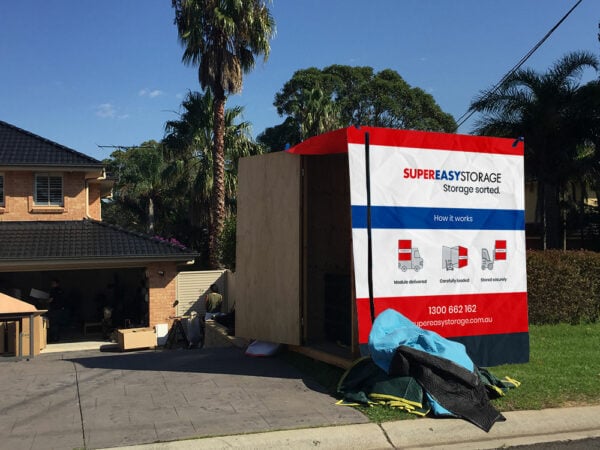
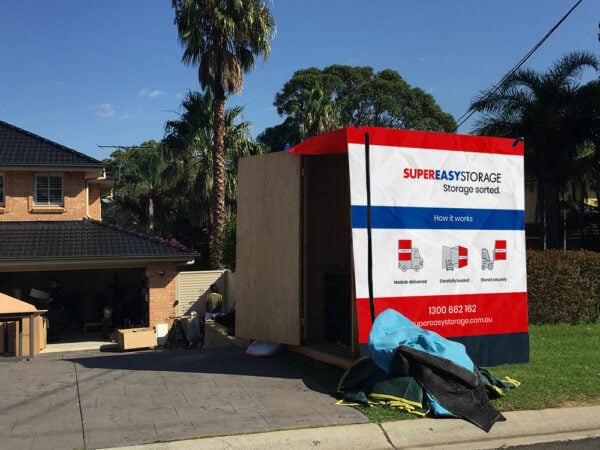
Contrary to conventional moving service, mobile and short-term self-storage like Super Easy Storage exists specifically to solve this. Offering no lock-in contracts, flexible short- or long-term storage, and door-to-you pickup, your belongings aren't sitting in limbo while you wait on paperwork. Once the truck pulls away, a track-your-truck feature gives you real-time visibility instead of a vague delivery estimate and a lot of hoping for the best.
How Super Easy Storage Makes This Easier
Most of the mistakes above come down to the same root problem: rigid systems that don't bend when your dates, your space needs, or your circumstances change. Super Easy Storage is built around the opposite idea.
There's no lock-in contract, so you're never forced to commit to a date or a duration before you actually know what you need: whether settlement slips by a week or your new lease starts sooner than expected, your storage flexes with you. With a month of free storage, Super Easy Storage allows you to adapt with the tight schedule, having a short break before starting your chapter. Your belongings are stored in the warehouse across big cities with 24/7 security and allowed-only access via pre-booking, so you know that your items are safe under our care.
Have a quote with Super Easy Storage today to find out more about what you need to prepare for your moving interstate!
FAQs for Further Packing Tips While Moving
1. How early should I book a removalist for an interstate move? Six to eight weeks out for a full house, one to three weeks for a smaller apartment, adjust based on how much you're moving.
2. What items are removalists not allowed to transport? Aerosols, gas bottles, flammable liquids, and paint, chemicals, or solvents are standard exclusions.
3. What if my moving date and settlement date don't line up? Short-term or mobile storage bridges the gap without needing to rush either date. Super Easy Storage narrows this gap with in-between self-storage, flexibly adapt to a few-day to few-week gap.
4. How can I pack my plants? Plants are categorised as fragile units, so cover your plants with layers of cotton wraps to allow moisture and ventilation. It’s best to prioritise moving plants to your destination as soon as possible.