Searching for self storage costs in Sydney and not sure what’s reasonable? Prices can vary a lot depending on location, unit size, and the type of storage you choose. To make things easier, this quick guide breaks down average Sydney storage prices and the key factors that influence what you’ll pay—so you can compare options confidently and avoid overspending.
Sydney Self-Storage Costs at a Glance
Calculating average cost for self-storage in Sydney depends on two factors: typical cost runs from $3.25 for a small unit up to $900 per month for a large unit, depending on size and suburb, and the difference in mobile storage prices to traditional self-storage.
In this article, we will discover core fees of self-storage options in Sydney, while providing crucial factors to help you calculate the storing cost correctly.
Sydney Self-Storage Price by Unit Size (Table)
Storage providers generally frame unit size on a scale from around 1.5 sqm to 20+ sqm. Here's how that scale translates to indicative Sydney pricing and what each size actually holds (according to Storageprices)
|
Average size |
Indicative weekly rate |
How many items it fits |
|
1.5-3 sqm |
$25–$60/week |
1-bedroom apartment contents |
|
6 sqm-10 sqm |
$50–$75/week |
2-bedroom apartment or small house |
|
9 sqm |
$50-$100/week |
3-bedroom house contents |
|
20+ sqm |
$75–$140/week |
4+ bedroom house, business inventory |
Price per sqm is the number worth checking against any quote: it strips out the difference in size and lets you compare providers on equal terms, which most pricing pages don't show.
What Actually Moves the Price in Sydney
Location — CBD vs Suburbs
Storage pricing tracks commercial real estate costs, so it's rarely the same across different parts of the city. Facilities in the Eastern Suburbs and Inner West sit at the higher end of the Sydney range because warehouse and land costs in those areas are higher. If your dates are flexible, checking a facility slightly outside your immediate suburb can be worth the trip.
Duration and Contract Length
Short-term rates (weekly, month-to-month) are usually priced higher per week than longer commitments. The duration you need to store your belongings got shorter than expected, but in some businesses, you still have to pay full price during the period or get cancellation fee as a trade-off.
Super Easy Storage runs on no lock-in contracts, so the short-term rate you see is the rate you pay every day, even if your move finishes early. There's no early-exit fee to budget for.
Security, Access and Climate Control
Self-storage across Australia now requires security, with basic requirements from CCTV and alarm monitoring, which is typically bundled into the base rate at most facilities. Additionally, companies now provide different protections to adapt different storing conditions, like climate control as an add-on rather than standard inclusion.
Control over who can access your unit is also crucial: a strict protocol of who can access your belongings will correlate with the overall protection, ensuring a multi-layer protection process could run smoothly.
Mobile Storage vs Traditional Self-Storage — Which Costs Less?
A traditional self-storage unit looks cheaper on paper, but the real cost includes a van hire, fuel, and your own time loading and unloading. If you're not experienced moving furniture, the risk of damage from multiple handling points as items go from home to van to unit could be tremendous for one moving.
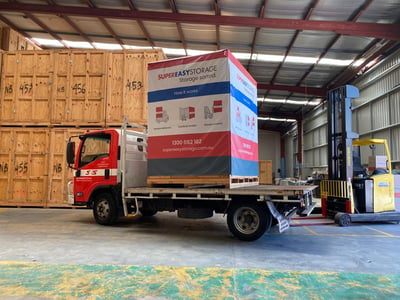
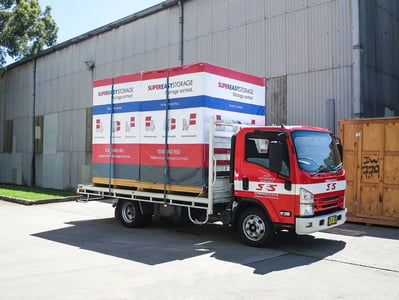
Mobile storage, on the other hand, offers all-in-one experience: a team comes to you, packs the mobile unit at your door, and transports it to storage. Because your belongings are handled once rather than loaded and unloaded repeatedly across a DIY move, the damage-and-replacement risk that traditional self-storage carries is largely designed out, reducing overhead costs for damaged items.
The other cost that's easy to underweight is your own time. A DIY van run to a facility, especially from the Eastern Suburbs or Northern Beaches into a Western Sydney facility, can take half a day. With mobile storage you can track your truck online instead of taking time off to supervise the move yourself.
For a single room or small apartment, mobile storage's rate is frequently competitive, including a van hire once you add up the pieces. For larger volumes stored long-term with no move required, a traditional unit can work out cheaper.
Hidden Fees to Ask About Before You Book
Before you sign with any provider, ask about each of these hidden cost while booking services— they rarely show up on the advertised rate:
- Bond or deposit: refundable, but confirm the amount and refund conditions
- Insurance: is contents cover included, or a separate line item?
- Admin/setup fee: some providers charge this on top of week one
- Late payment fee: vendors have different triggers, so ask beforehand to avoid unnecessary cost.
- Access fee: charged per visit at some facilities, unlimited at others
- Lock cost: you may need to buy a compliant lock rather than bring your own
The cancellation-fee question is the one most people forget to ask, and it's usually the most expensive if you get it wrong. If a provider requires a minimum term, ending early can cost you the remaining weeks. No lock-in contracts remove that calculation entirely.
When is the Peak Season of Moving in Sydney?
Before you move, it's recommended that you avoid the peak season of moving and storing items, as it would add up the demand and spike the overall cost.
- End of financial year (June) — businesses clearing office space and archiving documents ahead of EOFY, making it a high-demand season for self-storage.
- December moving season — the traditional peak for household moves before the new year. This period marks a rise in moving services, so booking in advance if you want to avoid overhead costs caused by demand raise.
- University semester turnover (November-February) — students near UNSW and USYD moving out of shared housing in suburbs like Newtown and Kensington at the end of each semester.
If your move falls in one of these windows, book ahead in one or two months, rather than the week you need the unit. Outside peak windows, short-term flexibility and promotions are more likely to be on the table.
Get an Exact Price for Your Situation
Every figure above is a Sydney-market indication, which helps you get the overall picture of the cost for self-storage in Sydney. Besides checking the market rate, it's also a great idea to use the storage calculator to get a personalised figure based on your actual volume and location, and compare mobile and traditional options side by side before booking, whether you're in the Eastern Suburbs, Inner West, Northern Beaches, or anywhere else across Sydney.
Looking for an easier, more affordable way to store your things in Sydney?
Super Easy Storage delivers mobile modules straight to your door, so you save on transport and only pay for the space you use.
Why Do Sydney Customers Choose Super Easy Storage?
- Door-to-you delivery: we bring the storage module to your home or business—no need to hire a van or travel to a facility.
- Only pay for the space you use: our modular system prevents overpaying for empty square metres.
- Flexible terms with no lock-in contracts: ideal for short-term or long-term needs.
- Professional loading available: AFRA-accredited teams or DIY.
- Safe, secure warehouse storage: with controlled access when you need it.
- Free protective blankets included: saving you additional packing costs.
- Over 100,000 customers served and thousands of verified reviews Australia-wide.
Store with Super Easy Storage and enjoy secure mobile self-storage in Sydney from just $3.25 per day.